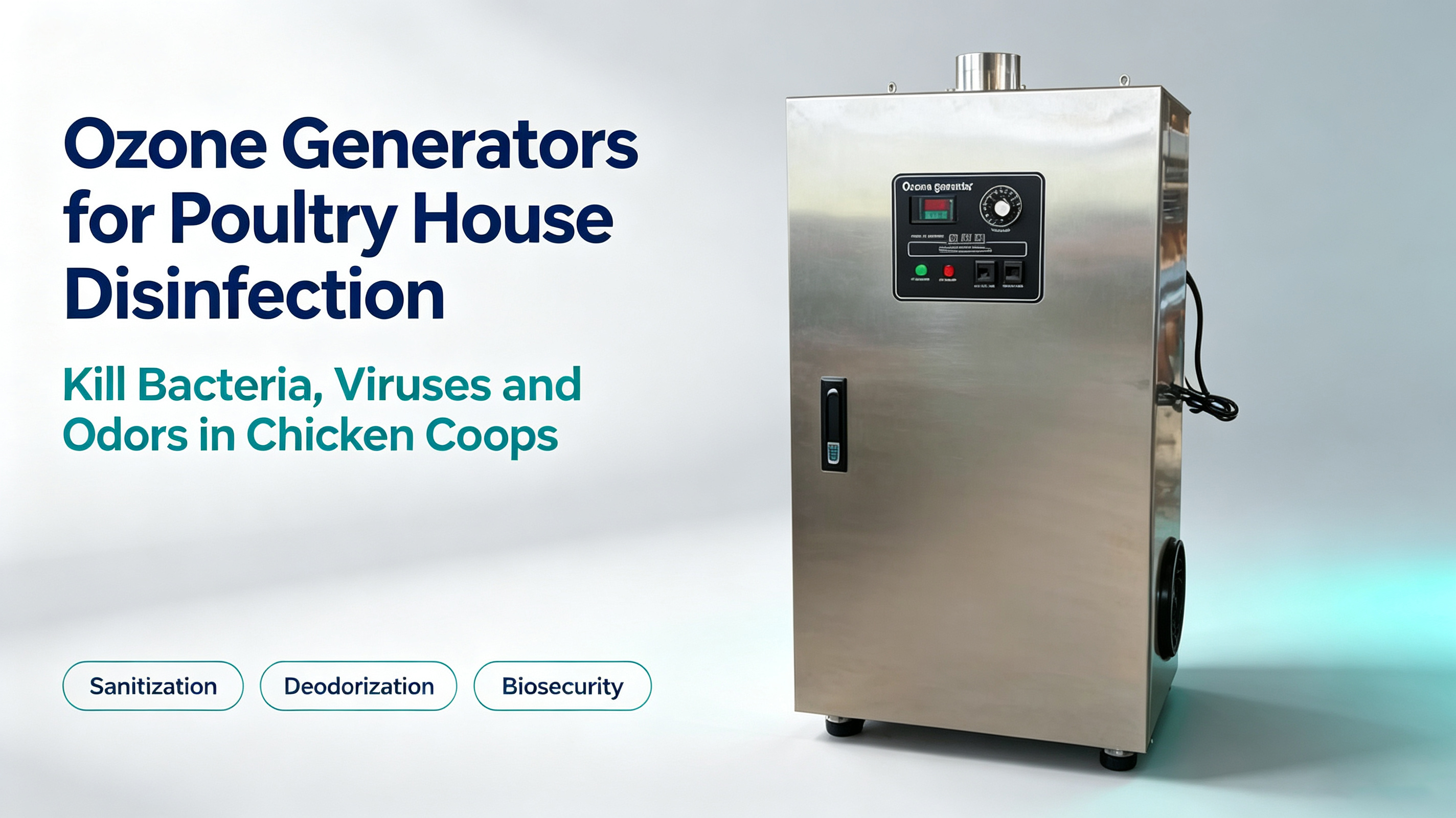
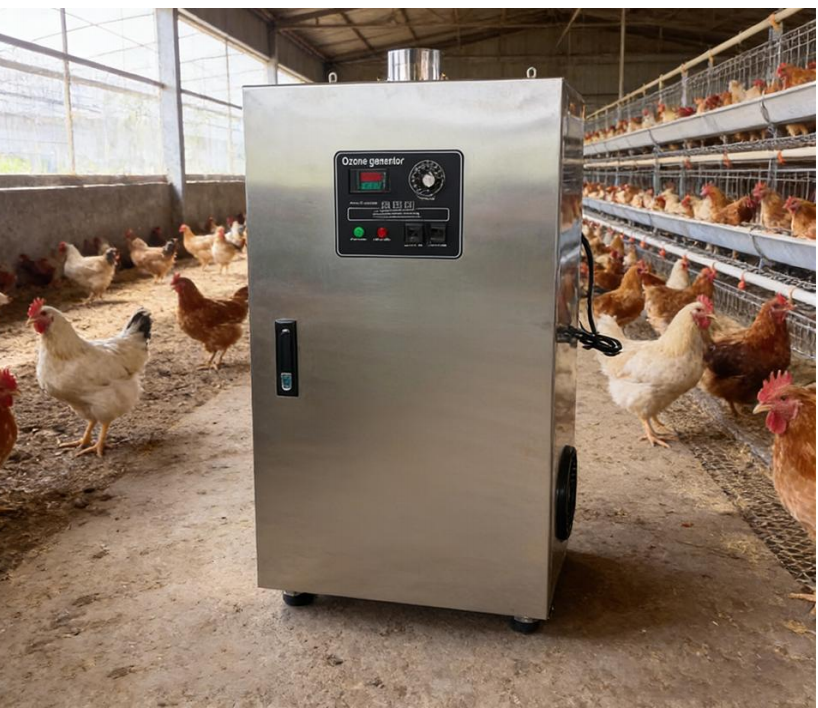
Keeping a chicken house clean is one of the most important parts of raising healthy poultry. Disease can spread quickly in a coop, especially when birds are kept close together. Bacteria, viruses, parasites, and odor-causing ammonia can build up over time, putting flock health and farm productivity at risk.
Many farms rely on traditional cleaning methods such as water washing, chemical disinfection, and ventilation. While these methods are useful, they may not always reach every corner of the house. Chemical residues can also be a concern if not handled properly.
This is where ozone generators can play a useful role. Ozone is a powerful oxidizer that can help reduce bacteria, viruses, fungi, and odors in the air and on surfaces. When used correctly, it supports a cleaner environment and stronger biosecurity between flocks.
Ozone is created when oxygen molecules are split by electrical energy and then recombined into O₃. Because ozone is unstable, it reacts quickly with organic matter, including bacteria, viruses, and odor compounds.
In a poultry house, an ozone generator can work in two main ways:
Unlike some liquid disinfectants, ozone does not leave a visible residue. After treatment, it naturally breaks down back into oxygen.
Ozone acts against a wide range of microorganisms. It can help support control of bacteria, viruses, fungi, and some parasites that may be present in a poultry environment.
Ammonia and other farm odors are common in chicken houses. Ozone can help break down odor molecules, improving air quality and reducing the need for constant masking agents.
When used according to manufacturer guidelines, ozone leaves no chemical residue on surfaces. This can be an advantage for farms looking to reduce dependency on traditional disinfectants.
Ozone generators can be used as part of a larger cleaning and disinfection program. They are especially useful during downtime between flocks, when a whole house can be treated more thoroughly.
Ozone is a powerful tool, but it must be used carefully. High ozone levels can be harmful to poultry, humans, and animals. Follow these basic guidelines:
Ozone treatment should only be performed when the chicken house is empty. Remove all poultry, workers, dogs, cats, and other animals before starting the generator.
Do not assume that more ozone is better. Use the concentration, runtime, and airflow recommendations provided by the equipment manufacturer.
After treatment, ventilate the house well before allowing birds or people back inside. Monitor the area to ensure ozone levels have returned to a safe range.
Ozone should not replace regular cleaning. It works best when combined with:
Ozone is safe only when used correctly. Chickens, like other animals, should not be exposed to high ozone concentrations.
The key rule is simple: Use ozone when the house is empty, then ventilate before returning the flock.
When used as a scheduled disinfection tool during downtime, ozone can support a safer and cleaner environment for the next flock.
Ozone generators can be an effective part of poultry house disinfection, especially when combined with thorough cleaning, ventilation, and biosecurity practices. They help reduce pathogens, control odors, and support a healthier environment for chickens.
However, ozone is not a magic solution. It requires careful planning, correct dosage, and strict safety procedures. Farms that use ozone responsibly are more likely to see the best results while protecting the health of their flock and workers.
If you are considering adding ozone to your farm, start by assessing the size of your chicken house, reviewing your current cleaning program, and selecting equipment that matches both your needs and your budget.