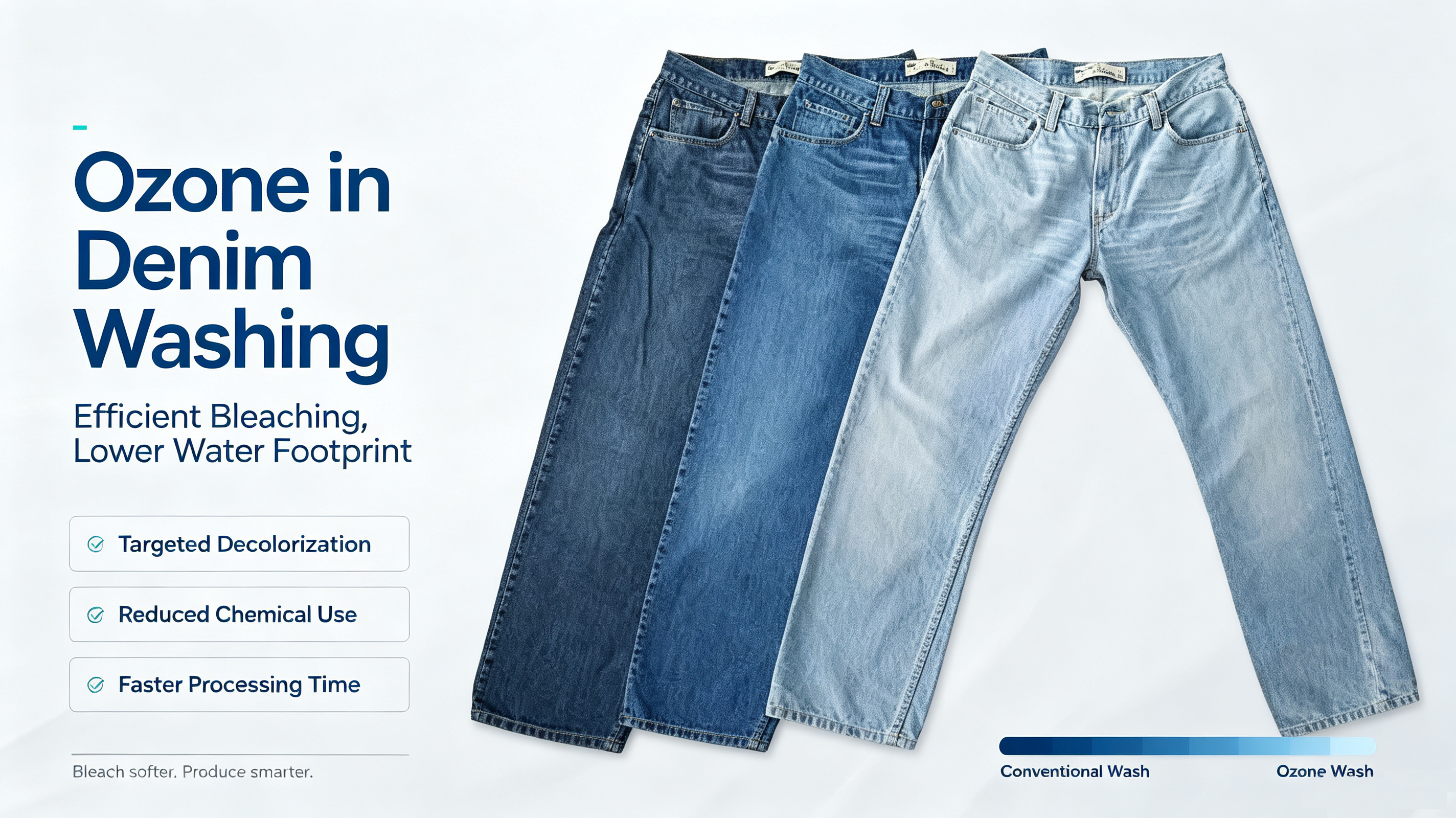
Traditional denim bleaching heavily depends on harsh chemical agents, massive water consumption and long‑time washing procedures. These conventional processes create serious wastewater pollution, high energy costs, and inconsistent fading effects on jeans. Nowadays, ozone washing has become a game‑changing sustainable solution for denim factories worldwide, delivering natural vintage fading with far less environmental impact.
Ozone (O₃) is a powerful oxidizing gas. When injected into the closed washing chamber, ozone reacts directly with indigo dye on the denim fabric surface.
✅ Massive Water Saving Ozone bleaching works in gas‑phase or low‑moisture conditions. It cuts water usage by up to 70‑80% compared with traditional wet‑chemical bleaching, greatly lowering wastewater discharge pressure for textile mills.
✅ Reduced Chemical Input Eliminate large amounts of sodium hypochlorite, potassium permanganate and other harmful bleaching chemicals. Wastewater becomes easier for subsequent biochemical treatment.
✅ Stable & Customizable Fading Effect By adjusting ozone concentration, processing time and humidity, manufacturers can precisely control colour grades: from medium‑blue worn‑in look to ultra‑light sun‑faded denim, covering diverse market styles.
✅ Lower Energy & Time Cost Shorter processing cycles improve production throughput. Less water‑heating work further reduces overall factory energy expenditure.
✅ Better Compliance for Sustainable Fashion Helps denim brands meet environmental standards and circular‑fashion requirements, supporting green supply‑chain certification.
Ozone does not replace all washing steps. After ozone fading, short rinsing is still needed to remove residual oxidation by‑products. Proper equipment sealing and exhaust treatment are necessary for safe workshop operation.
As the global textile industry pushes for greener manufacturing, ozone‑assisted denim washing offers a practical win‑win choice: factories gain stable, flexible fading performance, while significantly cutting water, chemical and pollution burdens. It is no longer just an experimental technology, but a mainstream upgrade for modern denim‑washing plants.