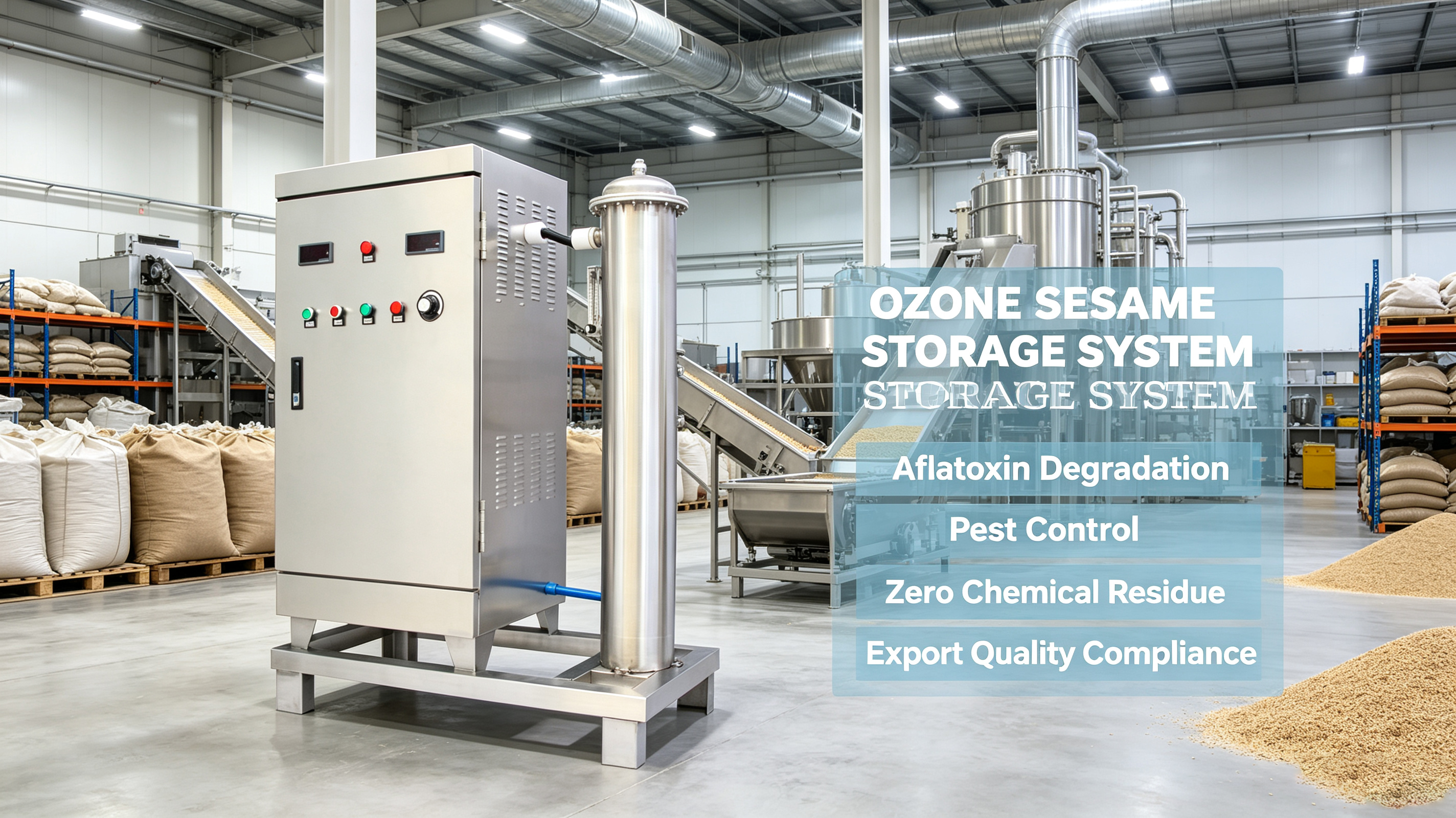
Compare ozone sesame green storage and traditional aluminum phosphide fumigation in aspects of advantages, defects, USD operating costs and economic benefits. Ozone eliminates aflatoxin, leaves no residue and helps sesame meet global food export standards with higher profits.
Case Details
Comparison Between Ozone Storage & Traditional Fumigation: Pros, Cons & Cost Analysis
Exchange rate adopted: 1 CNY = 0.1482 USD (2026 market reference)新浪财经
1. Advantages & Disadvantages
Benefits of Ozone Storage
- Zero chemical residue: Ozone decomposes into oxygen automatically. Sesame can be processed and shipped only 2 hours after disinfection. Aluminum phosphide fumigation requires 7–15 days of ventilation before delivery.
- Insect killing + toxin removal: Ozone degrades aflatoxin to avoid sesame spoilage and discard. Phosphine merely kills pests and cannot eliminate existing aflatoxin.
- No pest resistance: Stable long-term performance. Pests gradually develop strong resistance against aluminum phosphide year after year.
- Superior sesame quality: Inhibits lipid oxidation, keeps white sesame snow-white without rancidity, and raises oil extraction rate. Chemical fumigation darkens sesame and deteriorates grease quality.
- Export eligible: Free of chemical residues, compliant with food standards of Europe, America and other regions. Sesame treated by traditional fumigation is mostly barred from export markets.
- Safe & eco-friendly: No toxic waste or worker poisoning risks. Aluminum phosphide is highly toxic, and its residues are classified as hazardous waste.
Drawbacks of Ozone Storage
- Initial one-time investment for ozone generators, airtight warehouse renovation and circulating ventilation system.
- Long-duration high-concentration ozone treatment oxidizes the peel of white sesame and causes yellow discoloration.
Merits of Traditional Aluminum Phosphide Fumigation
No upfront equipment expenditure; convenient for small individual farmers for temporary sesame storage.
Defects of Traditional Fumigation
Chemical residues, high risk of excessive aflatoxin, high storage loss, safety hazards of poisoning, export restrictions, growing pest resistance.
2. Cost Comparison (1,000-ton sesame warehouse)
Costs for Ozone Preservation
- One-time equipment investment: $4,149 ~ $5,187 (28,000–35,000 CNY), service life 8–10 years, annual amortization ≈ $519
- Annual operating cost (electricity + maintenance): around $741
- Total annual cost: approx. $1,260
Costs for Traditional Aluminum Phosphide Fumigation
Fumigation twice annually, covering pesticides, labor, hazardous waste disposal & shutdown losses: $1,111 ~ $1,334 per year
Cost Conclusion
- Year 1: Ozone has higher total expenditure due to equipment procurement.
- From Year 2 onwards: Ozone achieves lower annual cost with no extra capital investment required.
3. Profit Gap
- Loss reduction: Loss rate of fumigated sesame is 4%–7%, while ozone-controlled loss rate drops to 0.8%–1.5%. For a 1,000-ton warehouse, loss savings generate extra revenue of around $71,136 per year.
- Premium revenue: Ozone-treated sesame meets export standards with superior grade, gaining an extra profit of $118.6 ~ $177.8 per ton.
Payback period of ozone equipment is merely 3–4 months.
Brief Summary
Traditional fumigation fits small farmers with short-term storage demands. Ozone technology brings lower comprehensive costs and higher profits for large-scale warehouses, exporters and long-term sesame storage.