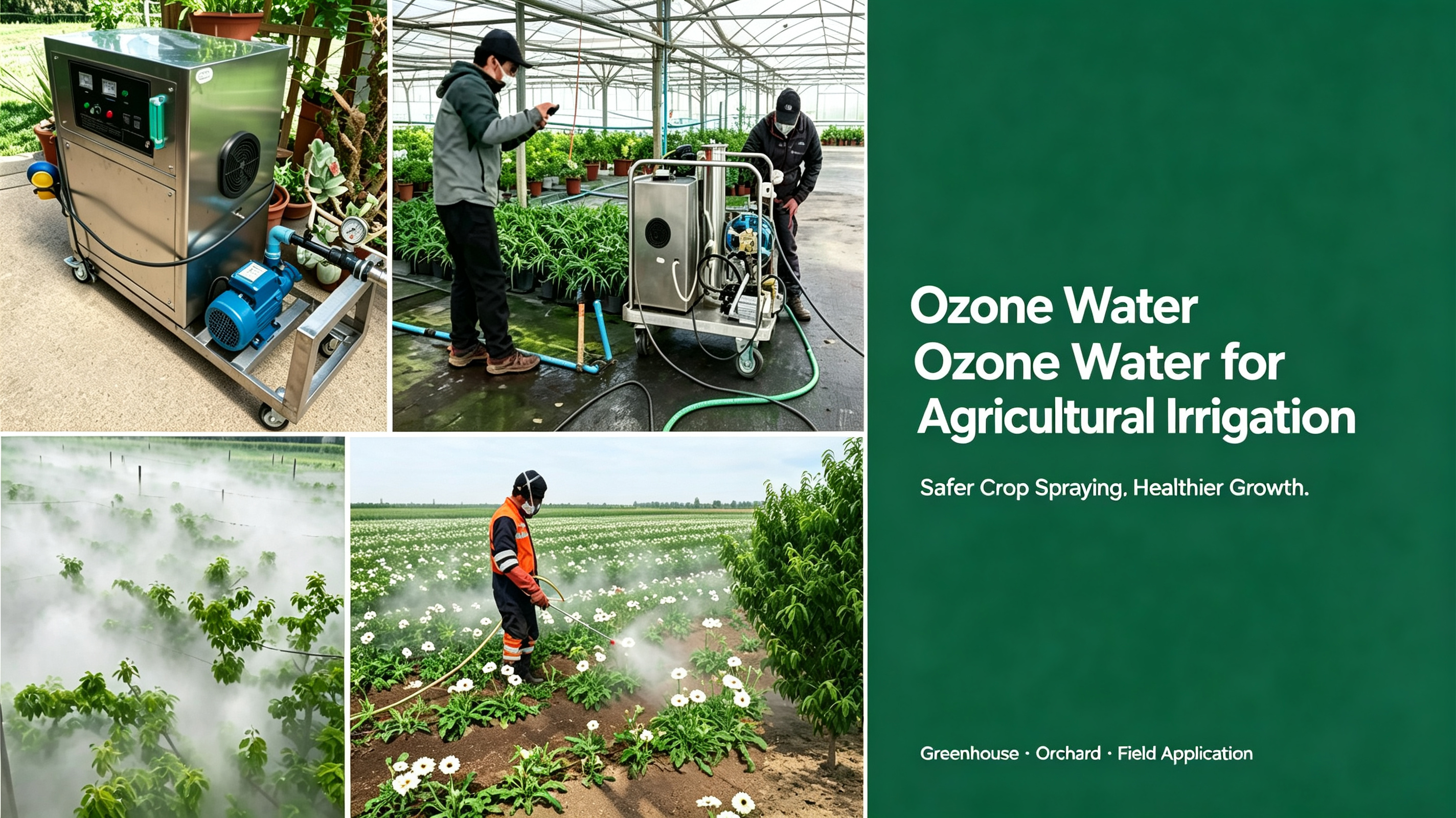
Poor irrigation water quality is the core cause of root rot, seedling death, repeated diseases and low crop yield in modern agriculture. Traditional disinfection methods such as chlorine and chemical fungicides cause residue accumulation, microbial resistance and secondary pollution. As a green and residue-free treatment technology, ozone irrigation treatment can purify water sources, clean irrigation pipelines, optimize rhizosphere environment, and realize sustainable and high-efficiency farm
3. Technical Application Data
3.1 Working Principle
Ozone (O₃) is a strong natural oxidant generated on-site by ozone generators. It can rapidly oxidize and destroy the cell walls of bacteria, fungi, nematode larvae and algae, completely killing waterborne pathogens and decomposing organic pollutants. After disinfection, ozone automatically decomposes into oxygen within 20–60 minutes, without any chemical residues, no soil damage, and no impact on crop safety, fully compliant with organic agricultural planting standards.
3.2 Core Application Scenarios & Technical Parameters
Scenario 1: Irrigation Raw Water Purification
Applicable to untreated river water, well water and pond water for farm irrigation. It removes fusarium, pythium, phytophthora, algae and suspended bacteria in water to avoid pathogen invasion of crop roots.
- Recommended ozone concentration: 0.3–0.8 mg/L
- Reaction contact time: ≥5–10 minutes
- Application frequency: Full-time continuous treatment or regular pretreatment before irrigation
Scenario 2: Irrigation Pipeline Cleaning
Solve pipeline blockage and slime caused by long-term accumulation of biofilm and algae in drip irrigation and sprinkler irrigation systems. Effectively clean pipeline attachments, inhibit microbial reproduction, and reduce dripper clogging.
- Recommended ozone concentration: 0.2–0.5 mg/L
- Cleaning cycle: Once a week / once two weeks
- Feature: No manual flushing, no chemical detergent
Scenario 3: Soil Root Zone Irrigation
Used for daily irrigation of field crops, vegetables and fruit trees. Increase dissolved oxygen in soil water, activate root cell activity, and inhibit root-knot nematodes and root rot diseases.
- Safe ozone concentration: 0.1–0.4 mg/L
- Key note: Low concentration for long-term prevention to avoid damaging beneficial soil microorganisms
Scenario 4: Hydroponic Recirculating Water Treatment
Suitable for greenhouse hydroponics and aeroponics systems. Disinfect recycled nutrient solution, prevent cross-infection of pathogens, and realize water recycling.
- Standard control index: ORP 650–750 mV
- Stable ozone concentration: 0.1–0.3 mg/L
3.3 Standard System Configuration
Ozone Generator → Venturi Injector → Gas-liquid Mixing Tank → Residual Ozone Monitor → Irrigation Main Pipe
(Optional: Tail Gas Ozone Destructor)
3.4 Technical Precautions
- Do not mix ozonated water with chemical pesticides and fertilizers for simultaneous use;
- Strictly control the concentration to avoid phytotoxicity and damage to beneficial microbes;
- Ensure sufficient gas-liquid reaction time to avoid residual ozone imbalance;
- Automatic ORP/dissolved ozone monitoring is recommended for stable operation.
4. Economic Benefits Analysis
4.1 Cost Reduction
- Reduce chemical costs: Ozone disinfection replaces most chemical fungicides, biocides and water purifiers, cutting chemical input costs by 50%–75% annually.
- Reduce maintenance costs: Eliminate pipeline biofilm and algae, reduce dripper blockage and pipeline maintenance frequency, save labor and replacement costs.
- Save water resources: Realize recycling of irrigation and nutrient water, reducing farm freshwater consumption by 20%–40%.
4.2 Income Increase
- Reduce crop loss: Effectively control soil-borne and water-borne diseases, reduce seedling death and root rot loss by 12%–28%.
- Improve crop yield and quality: High dissolved oxygen optimizes root absorption, promoting crop growth, with a comprehensive yield increase of 7%–25%. Crops have better gloss, taste and shelf life.
- Premium market price: Zero chemical residue meets green and organic planting standards, enabling products to gain market premium and expand sales channels.
4.3 Long-term Advantages
- Ozone is generated on-site with air and electricity, no continuous chemical purchasing;
- No pathogen resistance, stable disinfection effect for long-term use;
- Equipment service life up to 5–8 years, low daily maintenance cost;
- Fully automatic operation, saving manual management labor.
4.4 Investment Payback Period
Commercial greenhouses and hydroponic farms: full investment recovery within 10–22 months.
Large-scale field plantations: payback period of 2–3 years, with long-term continuous profit growth.
5. Conclusion
Ozone generator irrigation treatment technology is an eco-friendly, low-cost and high-efficiency solution for modern precision agriculture. It solves the pain points of poor irrigation water quality and frequent crop diseases, realizes chemical reduction, water saving, yield increase and quality improvement. It is an essential long-term investment for modern green planting and sustainable farm development.