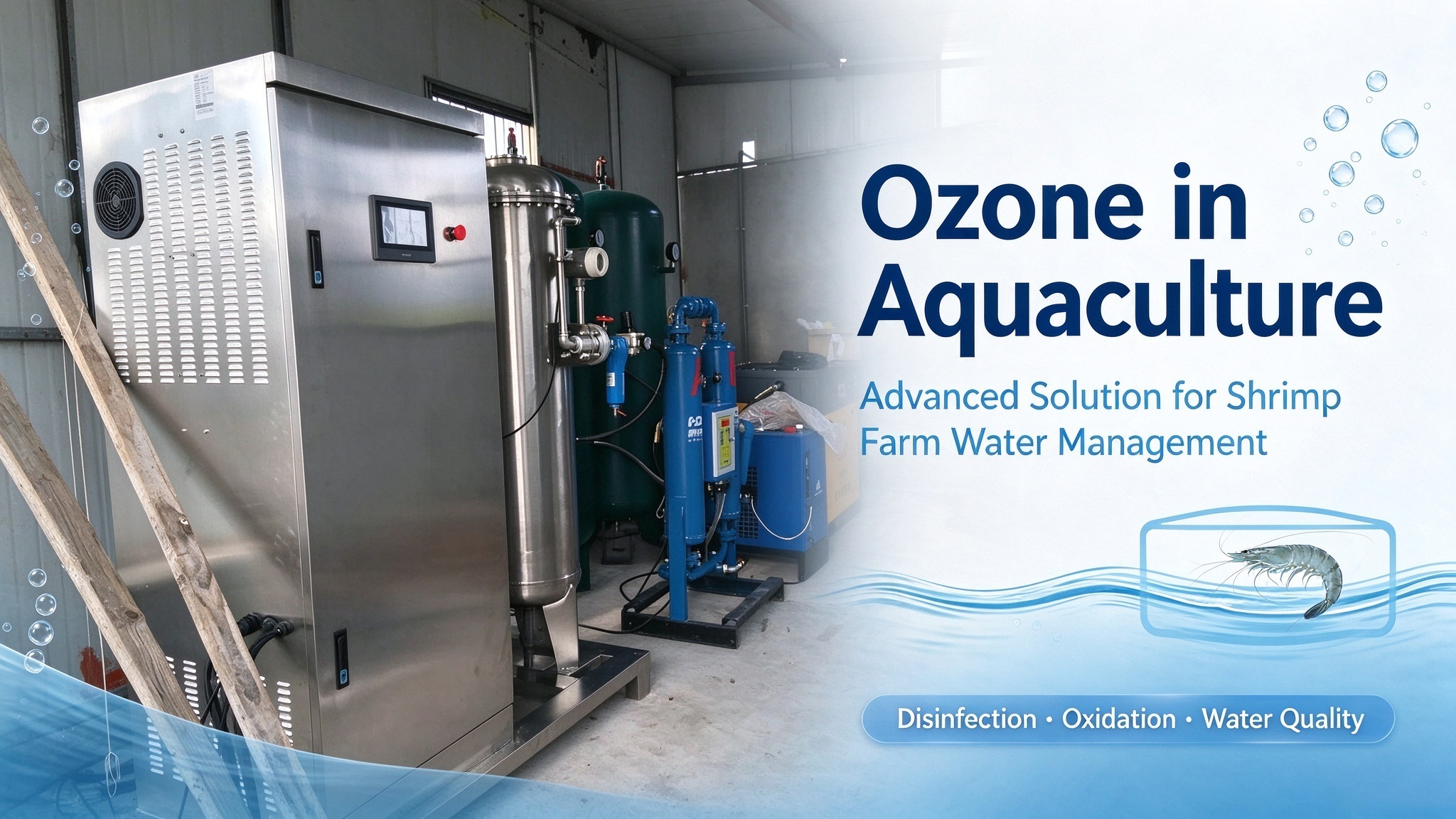
Water quality is the single most important factor in intensive shrimp farming. Poor microbial control, organic accumulation, nitrogenous waste, and unstable disease pressure can quickly undermine farm productivity, feed conversion, and biosecurity.
Ozone is one of the most powerful and environmentally compatible water treatment technologies available today. When applied correctly in aquaculture systems, ozone acts as a strong oxidant and disinfectant that can improve water quality, reduce pathogen load, and support more stable grow-out conditions.
Ozone treatment in aquaculture is not a single-point solution. It is usually integrated into a broader water management system that includes mechanical filtration, biological filtration, protein separation, pH control, and residual ozone destruction before water re-enters the culture tanks.
The main mechanisms are:
Ozone is a highly effective biocide. It can inactivate bacteria, viruses, fungi, and protozoa by damaging cell walls, proteins, and genetic material.
In shrimp farming, this helps reduce the risk of:
Unlike many chemical treatments, ozone does not leave persistent residues when properly decomposed.
Organic waste from uneaten feed, shrimp excretion, dead algae, and microbial biomass can accumulate rapidly in intensive systems.
Ozone oxidizes dissolved and colloidal organic matter, breaking it into smaller, more biodegradable compounds. This process helps:
Although ozone is not primarily a biological nitrification tool, it can help improve nitrogen management in several ways:
In practical operation, ozone should be coordinated with biofiltration and alkalinity management.
In many groundwater and well-water systems, iron, manganese, and hydrogen sulfide are common concerns. These can cause:
Ozone oxidizes these contaminants into filterable forms, making them easier to remove through mechanical or biological filtration.
An effective aquaculture ozone system should be designed around farm scale, water source, exchange rate, stocking density, and biosecurity level.
A complete ozone solution generally includes:
Ozone is particularly valuable in RAS, where water reuse is high and organic buildup is constant.
Benefits include:
Ozone can be used to treat incoming water, supply canals, or reservoir water before it enters grow-out ponds or tanks.
This is especially important in:
Ozone can also support end-of-pipe treatment by reducing organic load, disinfecting effluent, and lowering environmental impact before discharge.
Ozone decomposes into oxygen, so it does not accumulate in the culture environment like many traditional disinfectants.
By oxidizing organic matter and reducing turbidity, ozone helps create a more stable and transparent culture environment.
Consistent water disinfection can lower pathogen pressure and reduce the need for antibiotic or chemical interventions.
When combined with good nutrition, biosecurity, and system management, ozone can support better survival rates, more uniform growth, and improved feed conversion.
Properly operated ozone systems reduce reliance on harsh chemicals and can support more sustainable aquaculture production.
Ozone systems can be scaled for small nurseries, medium grow-out farms, and large industrial recirculating facilities.
Ozone is a powerful oxidant, so system design and control must be precise.
Key risks include:
For these reasons, ozone should not be used as a standalone treatment. It must be part of a comprehensive water management plan.
Ozone technology has become an important tool for modern shrimp aquaculture. It offers a reliable way to improve water quality, reduce pathogen load, control organic waste, and support more intensive and sustainable production systems.
For shrimp farms, the greatest value of ozone lies not only in its disinfection power, but also in its ability to improve overall water management, reduce chemical dependency, and create more stable conditions for shrimp growth.
When designed, installed, and operated correctly, ozone can be a key component of a high-performance aquaculture water treatment strategy.


