Organic farming strictly prohibits most synthetic pesticides and fungicides. This restriction brings big challenges in pathogen control for organic vegetable farms. Ozone has become one of the few approved physical disinfection tools for organic production
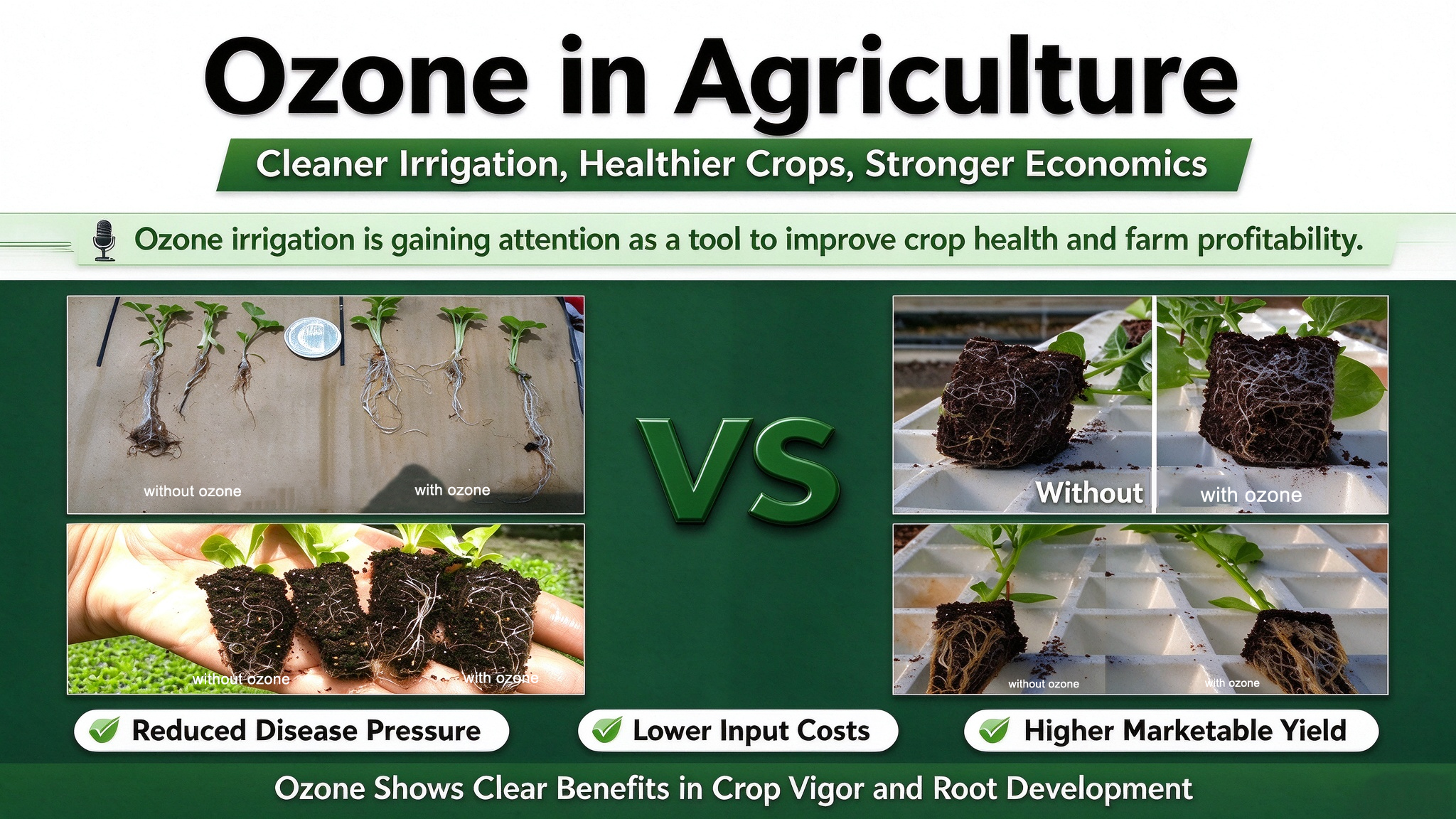
Ozone in Organic Vegetable Cultivation — Application & Position
Organic farming strictly prohibits most synthetic pesticides and fungicides. This restriction brings big challenges in pathogen control for organic vegetable farms. Ozone has become one of the few approved physical disinfection tools for organic production.
Main Applications
- Irrigation water disinfection Ozone treats raw or recirculating irrigation water, killing water-borne fungi, bacteria and oomycetes such as Pythium and Phytophthora. It stops root rot and damping-off disease at the source. Ozone rapidly decomposes into oxygen, leaving no chemical residue in soil or crops.
- Seed & seedling treatment Ozonated water soaks seeds or sprays plug seedlings to eliminate surface pathogens, improving germination rate and reducing seedling mortality. This is widely used for organic lettuce, celery, pepper and tomato nurseries.
- Cleaning for growing media & facilities Ozonated water cleans planting trays, pipelines, greenhouse floors and growing substrates, removing biofilm and algae without chemical residues.
- Post-harvest preservation Ozone can sanitize harvested organic vegetables, slowing decay and extending shelf life, without residual chemicals.
Position of Ozone in Organic Vegetable Production
Ozone is recognized as a physical, residue-free sanitizer in many organic certification systems.
- It fills the gap: organic farms lack options for effective root disease control. Ozone provides a non-chemical alternative.
- It supports continuous cropping: suppresses soil / nutrient solution pathogens and mitigates continuous cropping obstacles.
- It helps meet organic standards: no synthetic agrochemical residues on vegetables.
- It improves economic return: lower disease loss, reduced manual work and higher marketable yield of premium organic vegetables.
Limitations
Ozone works only at proper concentration and exposure time. Overdose may damage plant roots and leaves. It needs professional system design and operation monitoring. Ozone is an auxiliary tool, not a replacement for good agronomic management.
Tags: Organic Vegetable, Ozone Irrigation, Organic Farming, Residue-free Disinfection, Hydroponic Organic
