Ozone for Cooling Tower Water Treatment
The use of ozone in cooling tower treatment has received a great deal of attention in recent years. In the prevention and control
of legionnaires disease (legionella) causing microbes, ozone has taken an eminent roll. The specific characteristics of the
disinfectant make sure ozone gets the job done where others fail
There are additional specific characteristics that give ozone a great deal of appeal to cooling tower users.
Case Details
Ozone Treatment Solution for Cooling Tower Circulating Water & Economic Benefits
1. Technical Solution
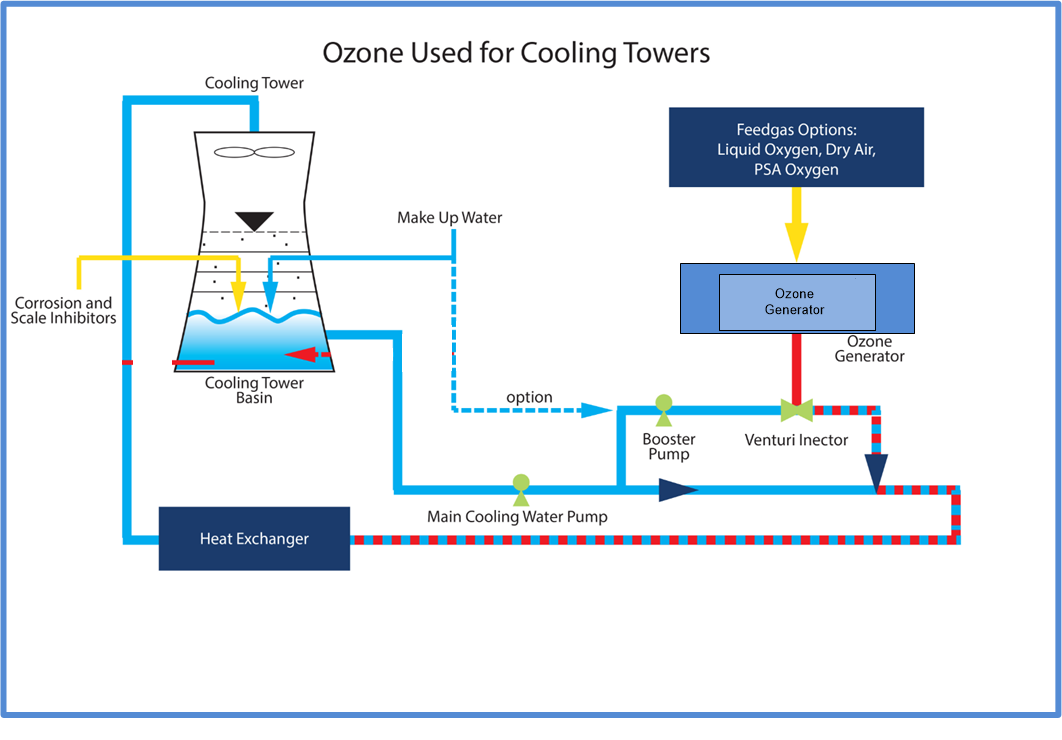
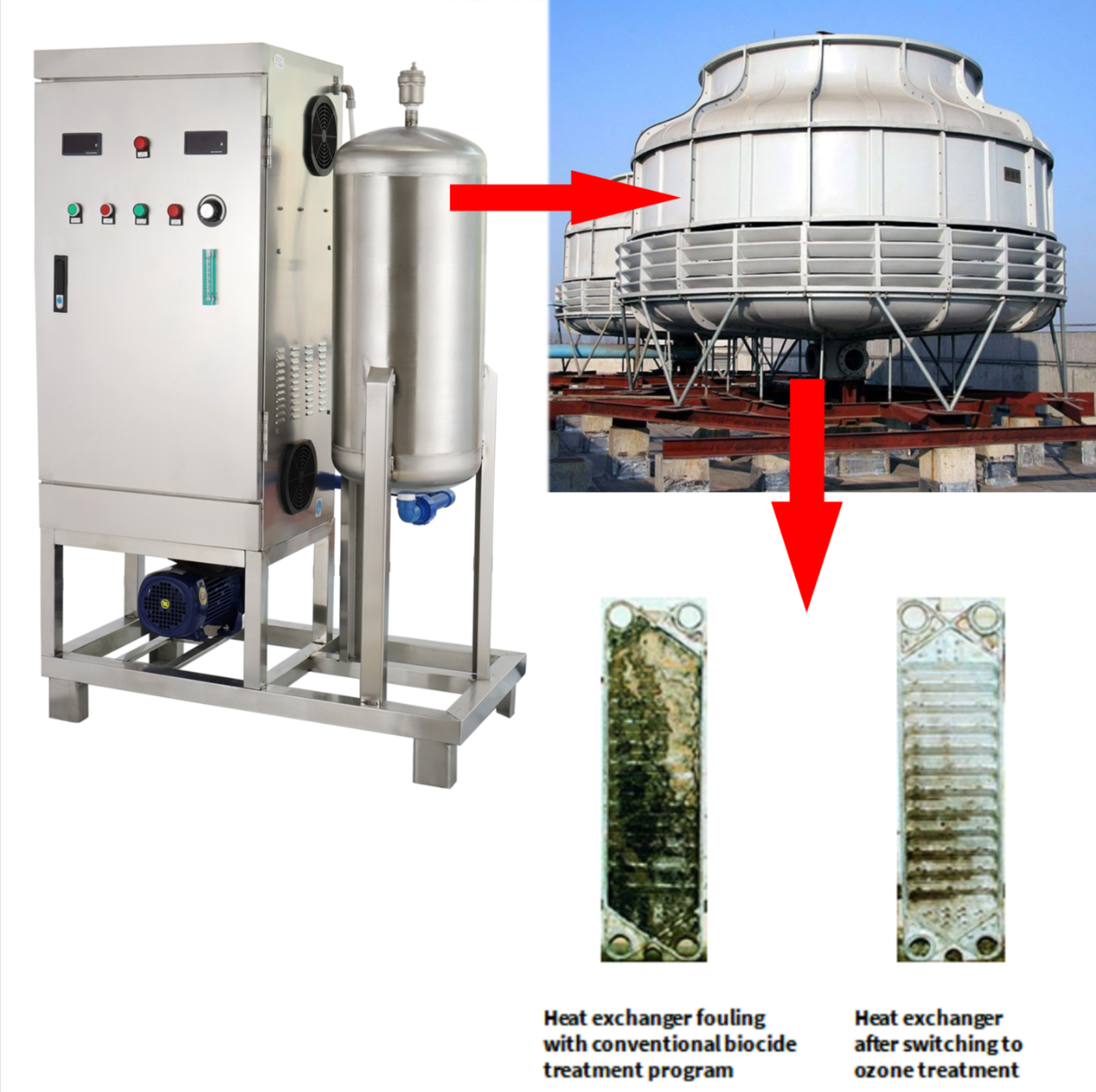
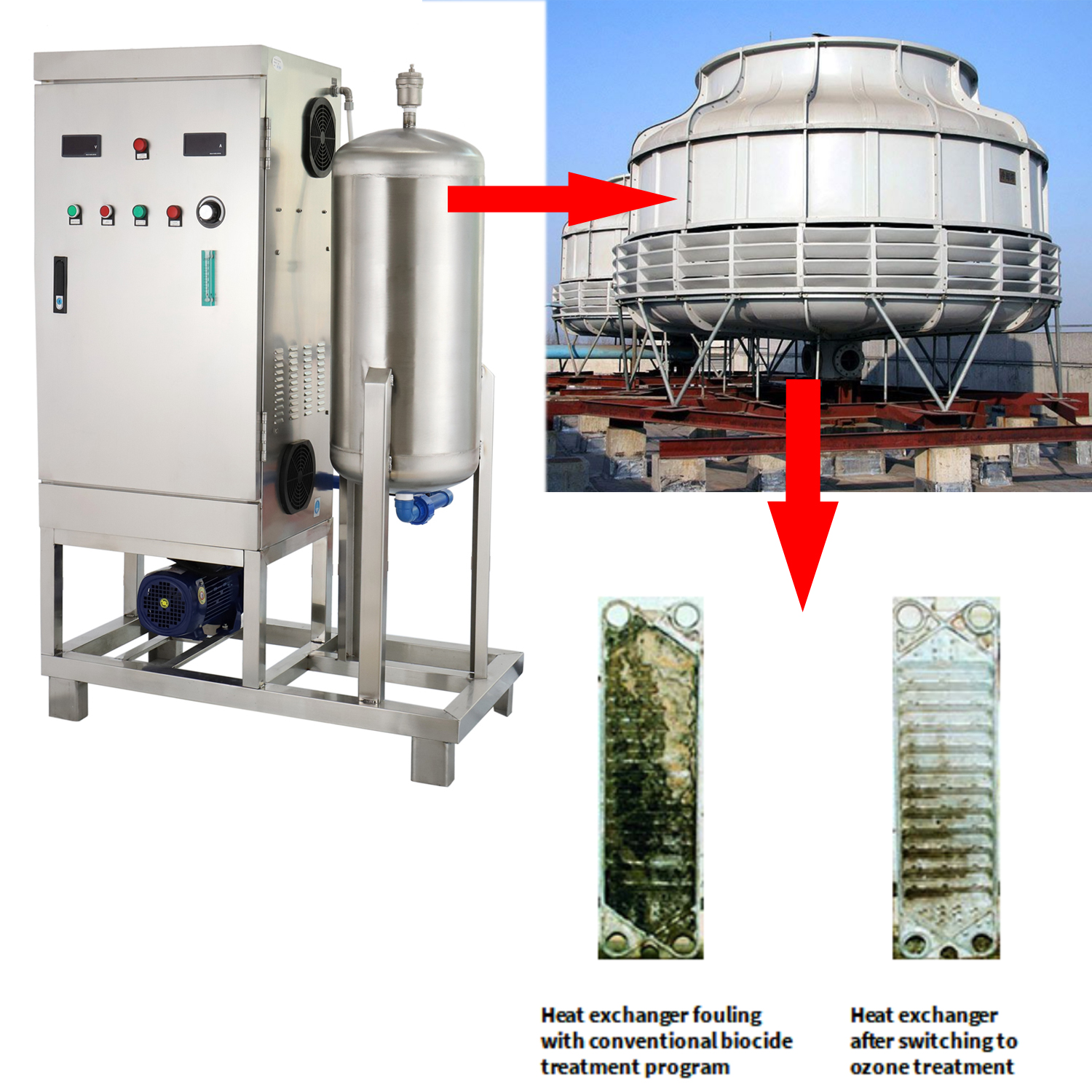
Ozone substitutes conventional chemical additives including biocides, scale inhibitors and corrosion inhibitors for cooling tower circulating water. It sterilizes bacteria, algae and Legionella effectively without inducing microbial drug resistance, strips biological slime and suppresses calcium carbonate scaling. Decomposing into oxygen naturally, ozone produces no chemical residues.
The system adopts side-stream injection technology: draw 5% circulating water as bypass flow, mix ozone via venturi ejector and micro-nano bubble mixer, then deliver treated water back to the cooling tower basin after reaction in a closed contact reactor (residence time ≥15 min). Equipped with ORP, dissolved ozone, conductivity online sensors and PLC automatic control system, it adjusts ozone output dynamically within the ORP range of 750–850 mV. The concentration ratio of circulating water can be lifted from 4–6 (chemical mode) to 12–18, realizing controlled drainage by conductivity limit only.
Tail ozone is catalytically decomposed into oxygen to meet emission standards. Optional self-cleaning filter is installed for sites with heavy dust to reduce ozone consumption by suspended solids. Ozone-resistant materials (316L stainless steel, PVDF, EPDM) are adopted for pipelines contacting ozonated water to avoid corrosion.
2. Economic Benefits
- Save chemical costs: Completely cancel biocide and scale inhibitor dosing, cut over 90% corrosion inhibitor consumption.
- Water conservation: Elevated concentration ratio greatly reduces blowdown volume, lowering water intake and wastewater treatment expenditure.
- Energy saving: Heat exchangers stay free of scale and biofilm, improving heat exchange efficiency and reducing power consumption of chillers and circulating pumps.
- Maintenance cost reduction: Extend pipeline pickling cleaning cycle from twice per year to once every 2–3 years, reduce downtime loss and manual maintenance work.
- Safe operation: Eliminate Legionella outbreak risks and comply with environmental regulations against phosphorus-containing wastewater discharge.