Cold storage is a critical stage in the post-harvest supply chain for fruits, vegetables, and flowers. The primary goal is simple but demanding: preserve quality, reduce loss, and extend shelf life as long as possible.
While temperature control is widely recognized as essential, humidity management is often underestimated. Even small fluctuations in relative humidity can affect product weight, appearance, texture, and market value.
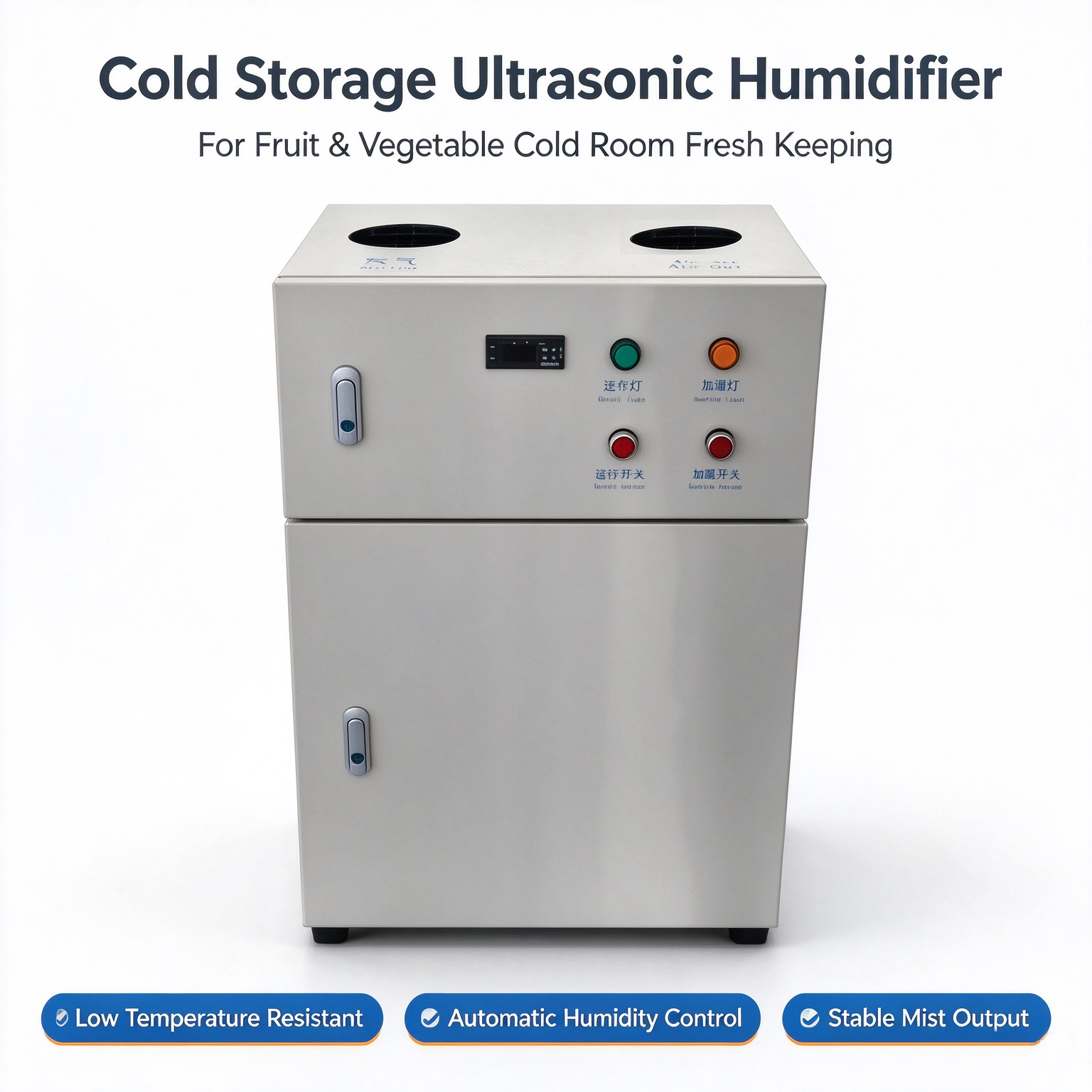
Ultrasonic humidification systems offer a practical solution for cold-room environments. By generating fine mist and maintaining stable humidity levels, they help storage operators protect product quality and improve overall economic performance.
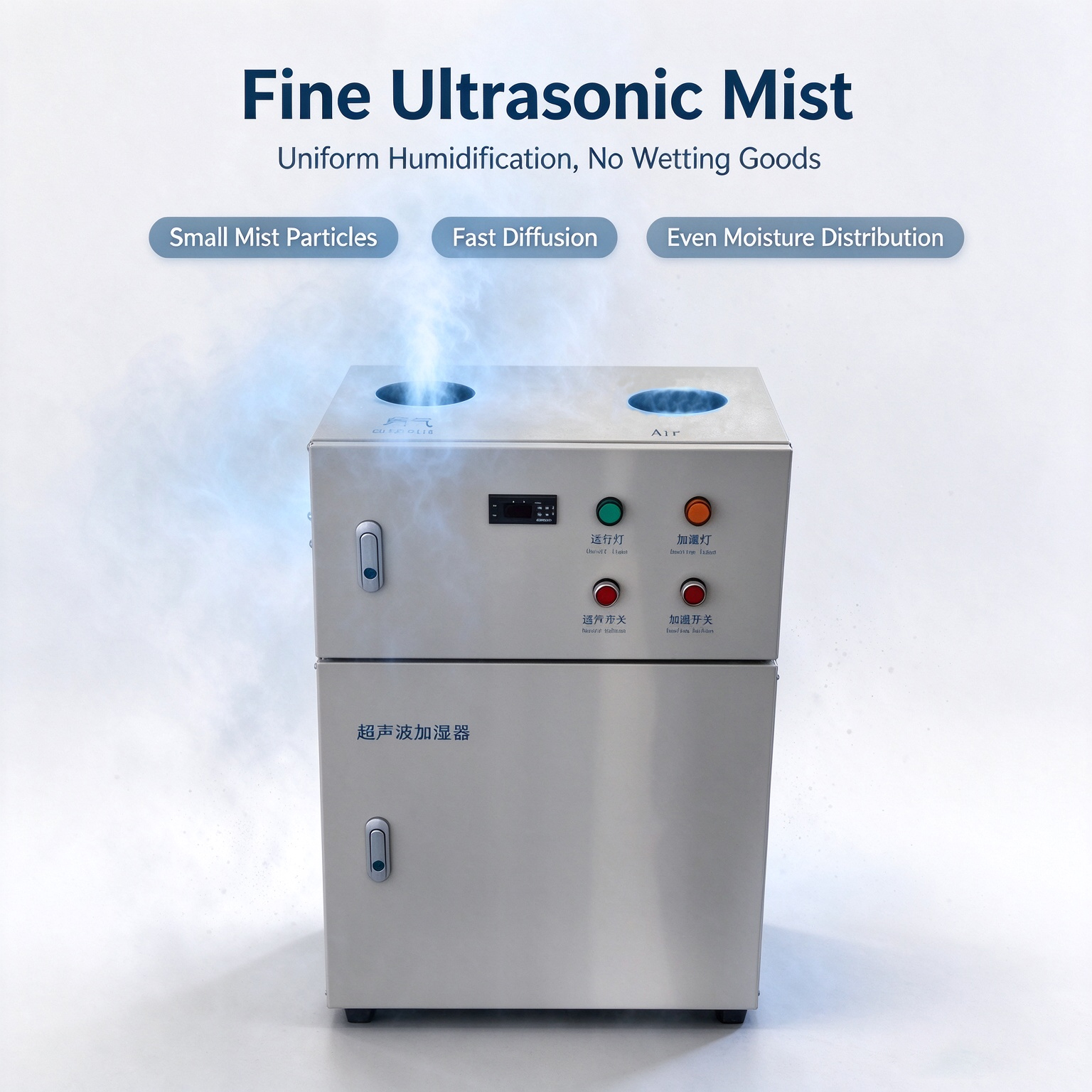
Ultrasonic humidifiers use high-frequency vibration to break water into tiny droplets, creating a fine mist that quickly absorbs into the air. In cold-storage applications, this mist is distributed inside the room to maintain target relative humidity.
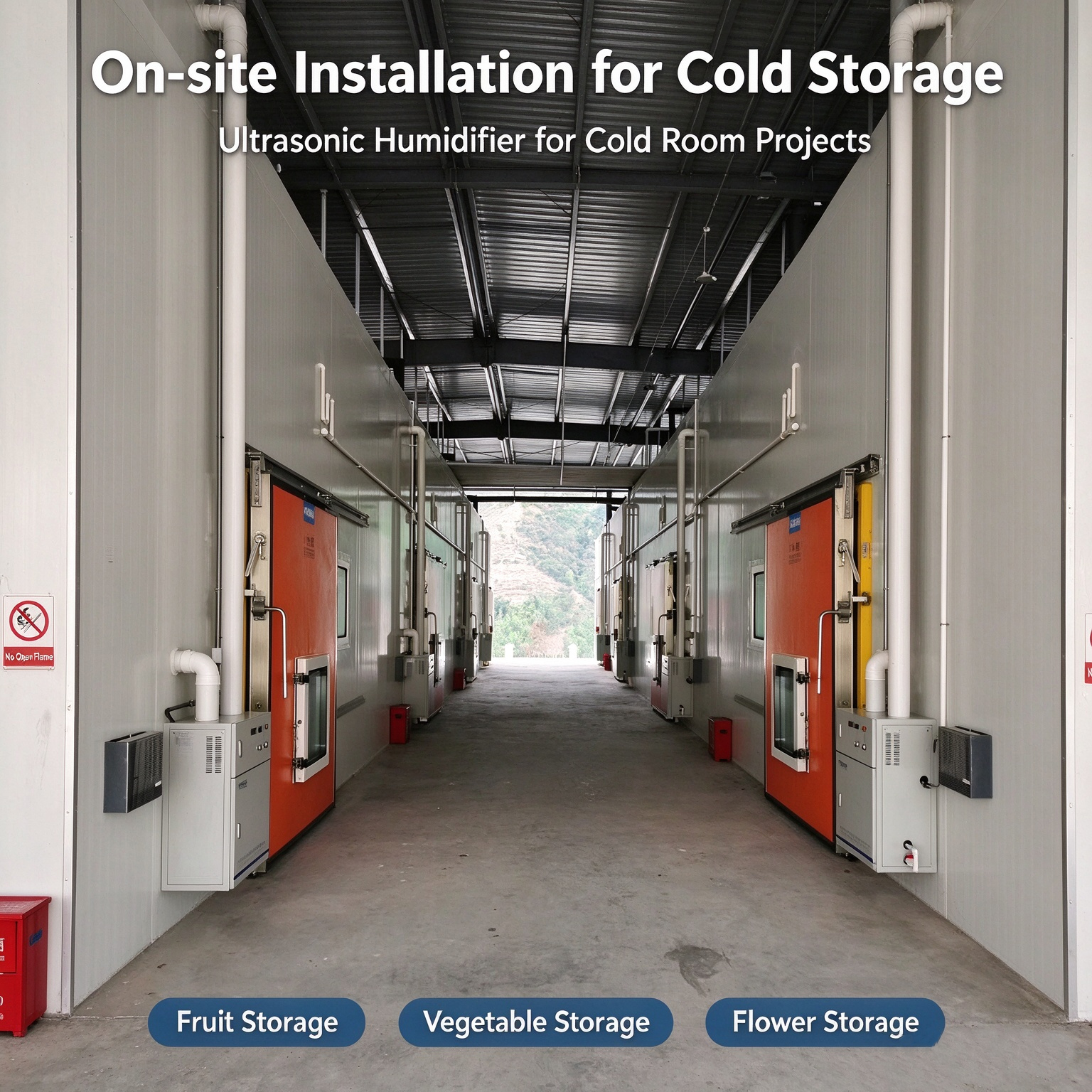
Compared to some traditional humidification methods, ultrasonic systems can respond rapidly to humidity changes. They are particularly useful in facilities where precise environmental control is required, including:
One of the most direct economic benefits of proper humidification is reduced weight loss. When air is too dry, fresh produce loses moisture through transpiration, resulting in visible shrinkage, softening, and lower saleable weight.
By maintaining appropriate humidity, ultrasonic humidification helps slow down moisture loss and preserves product weight over longer storage periods.
Dry air can cause wilting, shriveling, texture loss, and surface damage in fruits, vegetables, and flowers. These quality defects often reduce the product’s grade and marketability.
Stable humidity control helps preserve:
For high-value produce and flowers, quality retention directly supports better pricing and fewer rejections.
Many fresh products are sensitive to both temperature and humidity. When cold rooms are held at optimal humidity, the physiological deterioration of produce can be slowed, allowing operators to extend storage time.
A longer shelf life creates important operational flexibility:
Ultrasonic systems can be integrated with humidity sensors and control logic to maintain consistent setpoints. This is especially valuable in cold rooms where door openings, air exchange, and refrigeration cycles can continuously alter humidity.
Stable environmental control helps avoid repeated cycles of over-humidification and under-humidification, reducing the risk of both dehydration and condensation-related issues.
Every kilogram of lost product represents lost revenue. By reducing weight loss and quality deterioration, ultrasonic humidification can help cold-storage operators retain more saleable product.
The economic impact becomes significant when applied to high-volume storage operations, long-duration storage, or high-value crops.
Produce that maintains its freshness, firmness, and appearance is more likely to meet premium market standards. Humidification can therefore help preserve not just volume, but also the commercial value of the stored goods.
In some cases, even a small improvement in quality grade can generate a much larger return than the cost of the humidification system.
With better humidity control, storage operators have greater flexibility in managing inventory, logistics, and sales timing. This is particularly useful during peak harvest seasons, when large volumes of product need to be stored and dispatched efficiently.
Extended storage life also enables better planning for transport, marketing, and market allocation.
Quality problems caused by insufficient humidity can lead to product rejection, repackaging, or downgrading. By helping maintain more stable storage conditions, ultrasonic humidification can reduce these costs.
While the exact savings vary by product, facility size, and operating conditions, the reduction in rejection and rework is often one of the most attractive financial benefits.
To achieve the best results, cold-room humidification should be designed as a complete system rather than as a standalone equipment addition. Important factors include:
Ultrasonic systems should also be properly sized, installed, and controlled. Over-humidification can create condensation risks, while under-humidification limits the benefits.
Humidity management is a vital part of cold-storage operations for fruits, vegetables, and flowers. Ultrasonic humidification offers an effective way to maintain stable relative humidity, reduce moisture loss, preserve product quality, and extend shelf life.
For cold-room operators, the economic case for humidification comes from multiple directions: less weight loss, higher product value, lower rejection risk, and greater operational flexibility. While every facility has different requirements, the integration of ultrasonic humidification into cold-room management is often a practical investment in protecting post-harvest value.
Final Takeaway: In cold storage, temperature and humidity work together to preserve product value. Ultrasonic humidification is not just an air-treatment solution — it is a tool for protecting quality, reducing loss, and improving the economic performance of fresh-product storage.