Introduction
Water scarcity and stricter environmental discharge standards have pushed manufacturing enterprises to invest in wastewater advanced treatment and water reuse projects. Traditional biochemical processes can remove most biodegradable pollutants, yet they struggle with refractory organics, residual chroma and persistent contaminants.
As an efficient advanced oxidation technology, ozone treatment has become a preferred solution for industrial wastewater upgrading and reclaimed water recycling. With strong oxidizing properties, ozone breaks down stubborn pollutants, disinfects water bodies and improves effluent quality, making recycled water qualified for factory auxiliary production, flushing and circulating cooling systems.
Technical Principle & Application of Ozone in Wastewater Reuse
Ozone (O₃) carries powerful oxidizing potential. When dissolved in wastewater, it directly oxidize organic substances or generates hydroxyl radicals to crack macromolecular refractory organics into small molecular compounds.
Main technical functions in industrial wastewater treatment:
- COD & BOD Reduction
Decompose non-biodegradable organic matter after biochemical treatment, further lowering COD and BOD to meet reuse standard.
- Decolorization & Odor Removal
Destroy chromophoric groups in wastewater to eliminate color and offensive odor.
- Sterilization and Disinfection
Inactivate bacteria, algae and viruses without adding chlorine-based chemicals, avoiding secondary pollution.
- Break Toxic Organics
Degrade residual surfactants, phenols, dyestuffs and other toxic pollutants.
Applicable scenarios
Industrial production wastewater, factory comprehensive sewage, circulating cooling water, printing & dyeing wastewater, chemical wastewater and other water reuse projects.
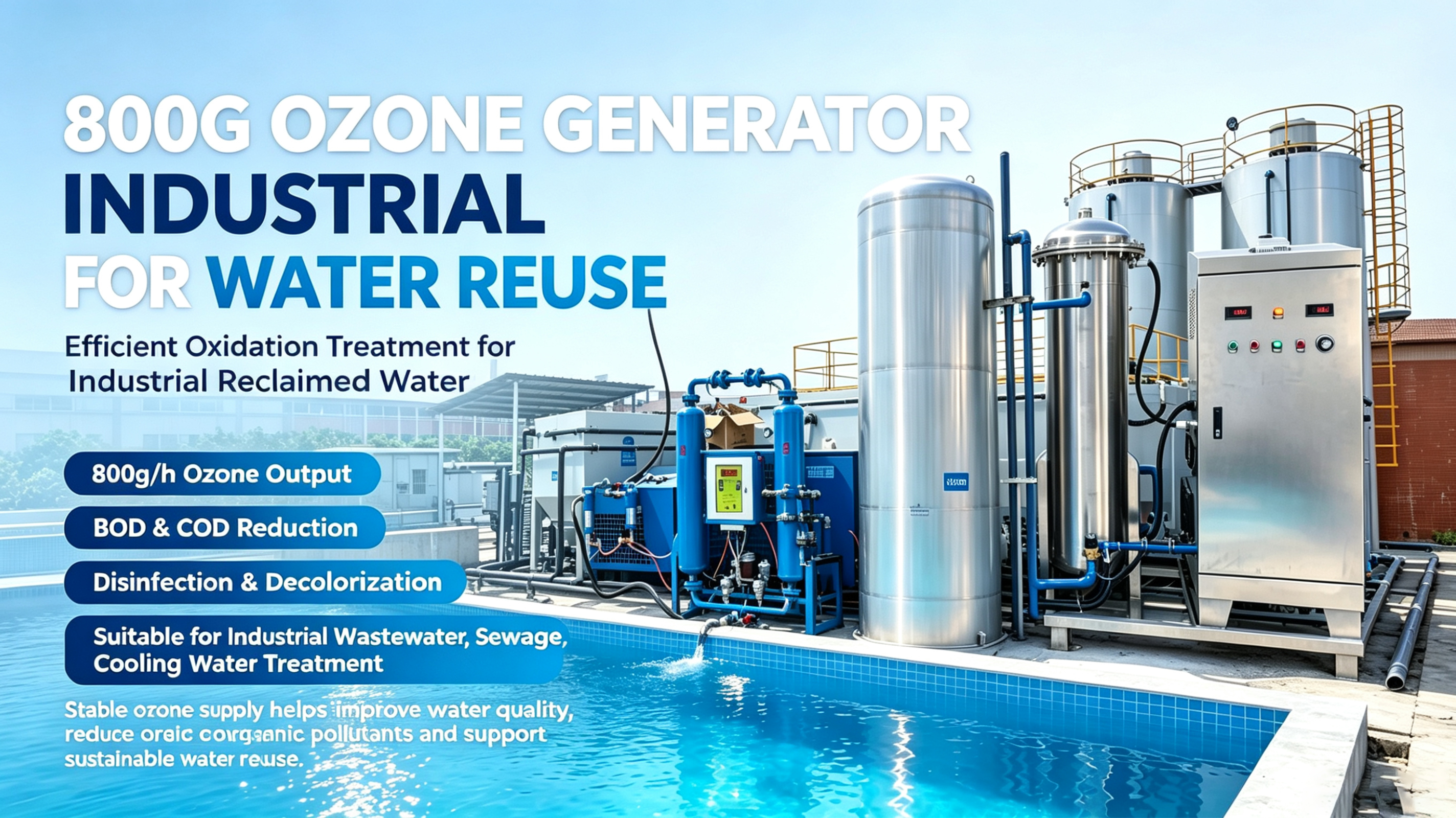
A complete ozone system includes ozone generator, oxygen supply unit, drying and purification equipment, gas-liquid mixing device and ozone reaction tank. It can be seamlessly connected with existing biochemical tanks and sedimentation tanks to build a mature advanced oxidation water reuse process.
Economic Benefits of Ozone-based Water Reuse System
Many factories hesitate to launch water reuse projects due to concerns over operation costs. Compared with Fenton oxidation and other traditional advanced oxidation processes, ozone technology delivers long-term economic advantages:
- Increase water reuse rate
Reduce reliance on municipal freshwater, significantly cutting water purchase expenses.
- Lower chemical consumption
No continuous addition of ferrous salts, hydrogen peroxide or other chemicals; save ongoing reagent cost.
- Less sludge output
Chemical oxidation generates massive sludge. Ozone treatment minimizes sludge production and reduces sludge disposal fees.
- Meet emission compliance
Stably control pollutants and chroma, avoiding fines caused by excessive discharge.
- Flexible operation
Ozone can be started and shut down on demand. The system runs automatically and requires low manual maintenance.
Points to Notice for Engineering Implementation
To achieve stable water reuse effect, engineering design should focus on several key factors:
- Guarantee sufficient ozone-water mixing efficiency;
- Design proper hydraulic retention time inside the reaction tank;
- Install tail gas destruction unit to eliminate residual ozone safely;
- Configure accurate ozone concentration monitoring to optimize operation parameters.
Conclusion
Against the background of stricter water resource management, industrial water reuse has shifted from optional investment to essential layout. Ozone advanced oxidation serves as a reliable finishing treatment process for industrial wastewater. It improves reclaimed water quality, balances environmental requirements and operating costs, and helps enterprises realize green, sustainable water resource recycling.
If you are seeking a high-efficiency ozone solution for industrial wastewater upgrading and water reuse, industrial ozone generator systems with 800g/h and larger capacity can be customized to match different wastewater conditions.